

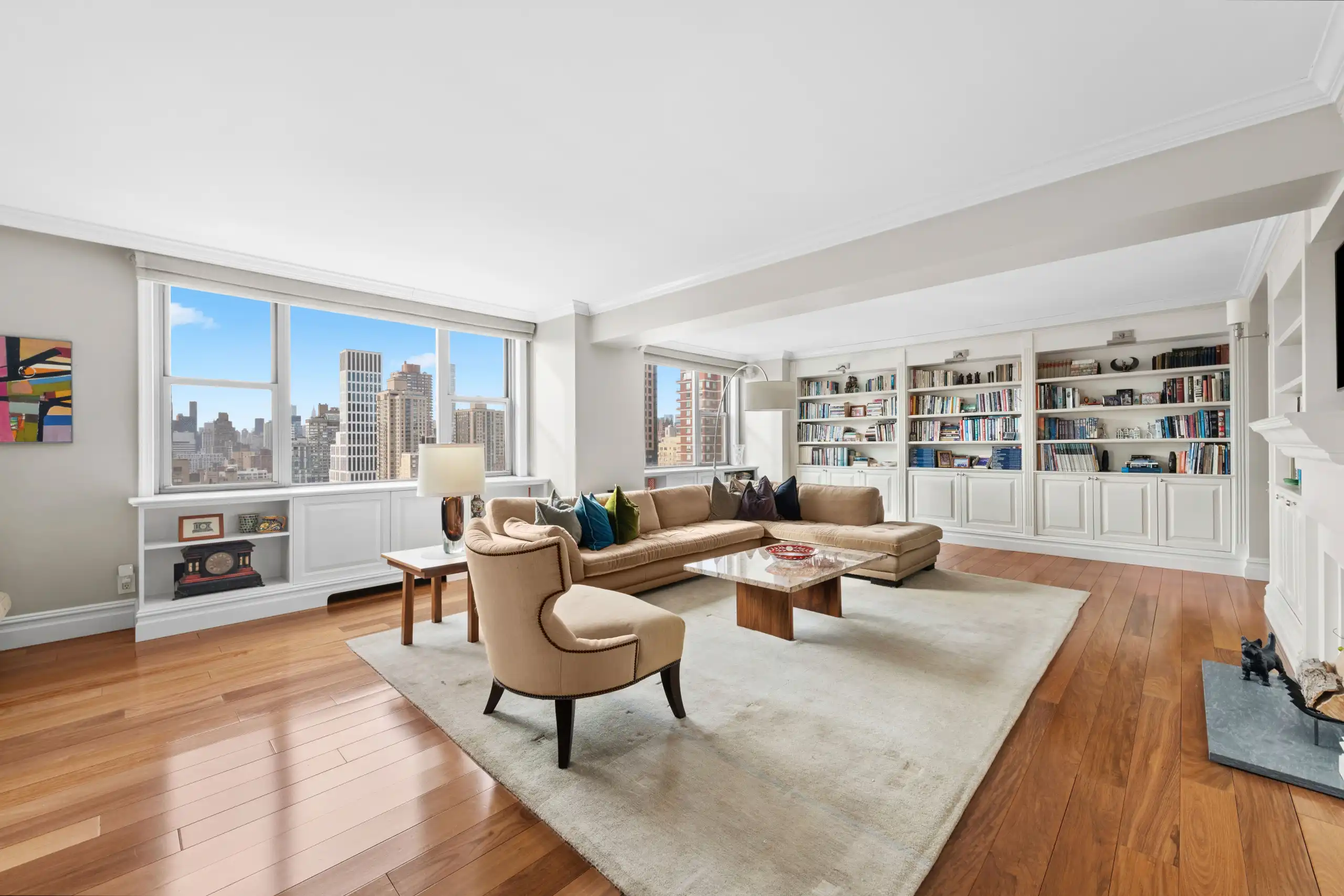
You’ve been living in New York for a while. You know the neighborhoods, you’ve done the rental thing, and now you’re ready to own. Maybe you’ve already started browsing listings on the Upper East Side and noticed that the vast majority of apartments — especially the beautiful prewar buildings on Park and Fifth — are co-ops.
Co-ops aren’t harder to buy than condos. They’re just different. Once you understand how they work, the process feels completely manageable. And the payoff is real: co-op apartments on the Upper East Side tend to offer better value per square foot, more character, and (if you buy in the right building) a neighbor-vetting process that actually protects your investment.
This guide walks you through everything: what you’re actually buying, how the process works, what the board is looking for, and how to avoid the mistakes that trip people up.
What you’re actually buying
When you buy a condo, you own real property — a specific unit with a deed. When you buy a co-op, you’re buying shares in a corporation that owns the building. Those shares come with a proprietary lease that gives you the right to occupy a specific apartment.
In practice, it feels exactly like ownership. You pay a mortgage, you decorate how you want, you build equity. But the legal structure matters in a few important ways:
- Your monthly costs include maintenance (covering your share of the building’s mortgage, taxes, and operating expenses) rather than separate common charges and property tax bills
- You’ll need a co-op-experienced lender — not every bank does co-op loans, and the underwriting works differently
- The building’s board has approval rights over who can purchase
- Subletting is often restricted or prohibited; most UES co-ops expect you to live there
A note on maintenance: Co-op maintenance fees look high compared to condo common charges, but a significant portion is typically tax-deductible (the share attributable to the building’s underlying mortgage interest and real estate taxes). Your accountant can tell you exactly how much. Factor this in when comparing monthly costs side by side.
Co-op vs. condo: which is right for you?
On the Upper East Side, roughly 75–80% of inventory is co-op. If you want a classic prewar building with high ceilings, herringbone floors, and a white-glove lobby, you’re almost certainly looking at co-ops.
| Factor | Co-op | Condo |
|---|---|---|
| What you own | Shares in a corporation + proprietary lease | Real property with a deed |
| UES inventory share | ~75–80% of listings | ~20–25% of listings |
| Board approval | Required | Right of first refusal only (rarely exercised) |
| Down payment | Typically 20–25% minimum; some buildings 50%+ | As low as 10% in some cases |
| Monthly costs | Maintenance (covers taxes + building mortgage) | Common charges + separate property tax bill |
| Tax deductibility | Portion of maintenance is deductible | Property taxes deductible separately |
| Subletting | Often restricted or prohibited | Generally permitted |
| Buyer closing costs | Lower (no mortgage recording tax, no title insurance) | Higher (mortgage recording tax + title insurance) |
| Building character | Mostly prewar; architectural detail | Mostly newer construction |
| Price per sq ft | Typically lower | Typically higher |
If you’re planning to live in the apartment full-time and value building quality and value per square foot, a co-op is almost always the right call on the UES.
The buying process, step by step
1
Get pre-approved with the right lender
Not all lenders work with co-ops. You need someone who does this regularly and understands proprietary leases, building financials, and co-op-specific underwriting. We refer our clients to lenders who know the UES market and the specific buildings we work in.
2
Find the apartment and make an offer
Once your offer is accepted, both sides sign a contract and you put down a 10% deposit. This is also when your attorney begins reviewing the building’s financials and offering plan, an important step unique to co-ops.
3
Assemble your board package
The board package is the co-op’s equivalent of a job application. It typically takes two to four weeks to pull together and includes financial documents, reference letters, and a personal statement. We coach every client through this process from start to finish.
4
Board interview
Not all buildings require an interview, but many UES co-ops do. It’s typically a brief, conversational meeting with a few board members. It’s not an interrogation; they just want to get a sense of who you are. We’ll help you prepare.
5
Board approval and closing
Once the board approves your application, you schedule the closing. Co-op closings are typically faster and less complex than condo closings. There’s no title insurance and no mortgage recording tax, which means your closing costs as a buyer are lower.
The board package: what they’re looking for
The board package is the part that intimidates buyers most, but it’s really just documentation that tells a coherent financial story. Here’s what goes into a typical UES co-op board package:
Financial documents
- Two years of tax returns (personal and business if applicable)
- Two to three months of bank and brokerage statements
- Recent pay stubs or proof of income
- A personal financial statement (net worth summary)
- Loan commitment letter from your lender
Reference letters
- Two to three personal references from people who know you well
- One to two professional references
- If you’re currently renting, a landlord reference is often requested
Personal statement
A brief letter introducing yourself: who you are, why you want to live in the building, how you plan to use the apartment. Keep it warm and genuine. Boards respond to authenticity, not corporate polish.
What boards actually care about most: Financial stability is the primary concern. They want to know you can reliably pay your maintenance and won’t put the building in a difficult position. After that, it’s character. A package that tells a clear, organized, honest story goes a long way.
Financial requirements: what to expect
Every building sets its own standards, but here are the benchmarks you’ll commonly encounter on the Upper East Side:
| Requirement | Typical UES Standard | Stricter Buildings |
|---|---|---|
| Down payment | 20–25% minimum | 50% or all-cash required |
| Financing limit | Up to 75–80% of purchase price | 50% or no financing allowed |
| Debt-to-income ratio | 25–30% max (housing costs vs. gross income) | 20–25% max |
| Post-closing liquidity | 12–24 months of mortgage + maintenance | 2+ years, sometimes more |
Post-closing liquidity is the requirement that surprises buyers most. It means: after your down payment clears, you still need a meaningful cash cushion in liquid assets. Boards don’t want to approve someone who will be financially stretched from day one.
Why boards reject applicants (and how to avoid it)
Board rejections are rarer than people think, especially when a buyer is well-prepared. The most common reasons applications run into trouble:
Insufficient post-closing liquidity
Putting every last dollar into the down payment and having little left over is the single most common issue. If liquidity is tight, it’s worth discussing with us before you target a specific building.
Subletting intentions
If a board picks up any sense that you’re planning to rent out the apartment, even eventually, many UES co-ops will pass. Be clear that you intend to use it as your primary residence.
Disorganized or incomplete packages
A package that’s hard to read, missing documents, or tells an inconsistent story raises flags. We help every client organize their package so it’s clean, complete, and easy for the board to review.
Interview missteps
The board interview is not the place to negotiate, complain about the process, or volunteer information that wasn’t asked for. Keep it conversational, positive, and brief. We prep every client before they walk in.
Frequently asked questions
How long does co-op board approval take?
From the time you submit your package to board approval, expect four to eight weeks on average. Some buildings move faster; a few move slower. The package assembly itself typically takes two to four weeks, so build this into your overall timeline when you’re under contract. Can a co-op board reject me without giving a reason?
Yes. Co-op boards in New York are not required to give a reason for rejection, as long as the rejection doesn’t violate fair housing laws. In practice, most rejections come down to financial concerns rather than anything personal. A well-prepared package dramatically reduces the risk. Is getting a mortgage for a co-op harder than for a condo?
It’s not harder — it’s just different. You need a lender who is approved to work with that specific building (most established UES co-ops have an approved lender list), and the underwriting looks at the building’s financials as well as your own. We connect our clients with lenders who specialize in this and know the buildings well. How much should I budget for closing costs as a co-op buyer?
Co-op buyers generally have lower closing costs than condo buyers — typically 1.5–2.5% of the purchase price. There’s no mortgage recording tax and no title insurance, which saves a significant amount. You will pay attorney fees, a move-in deposit, and any applicable flip tax (which varies by building). If your purchase price is $1 million or above, add the mansion tax on top. What is a flip tax and who pays it?
A flip tax is a transfer fee charged by the co-op when a unit is sold. It’s most commonly paid by the seller, though some buildings split it or assign it to the buyer. The formula varies: it might be a percentage of the sale price, a percentage of the profit, or a flat fee per share. Your attorney will flag this when reviewing the offering plan, and we’ll factor it into our negotiation strategy from the start.
Buying a co-op on the Upper East Side is one of the best real estate decisions you can make in this city, but the process rewards preparation. The buyers who move through it smoothly are the ones who understand what’s expected before they start, and who have a team that’s done it hundreds of times.
With over $1.22 billion in career sales and more than 1,000 transactions completed (the majority of them co-ops on the Upper East Side), we know this process inside and out. We’ll help you find the right building, put together a package that stands out, and get you to the closing table without surprises.
Related Reading
- NYC Closing Costs Explained: A 2026 Guide for Manhattan Buyers and Sellers
- Living on the Upper East Side: A 2026 Insider’s Guide
- How to Win a Bidding War in NYC Without Overpaying
The Stacey Froelich Team · $1.22B in Career Sales · 1,000+ Transactions
Ready to start your co-op search?
Let’s talk through your timeline, budget, and what you’re looking for. We’ll take it from there.
Social Cookies
Social Cookies are used to enable you to share pages and content you find interesting throughout the website through third-party social networking or other websites (including, potentially for advertising purposes related to social networking).