

By The Stacey Froelich Team | October 21, 2026
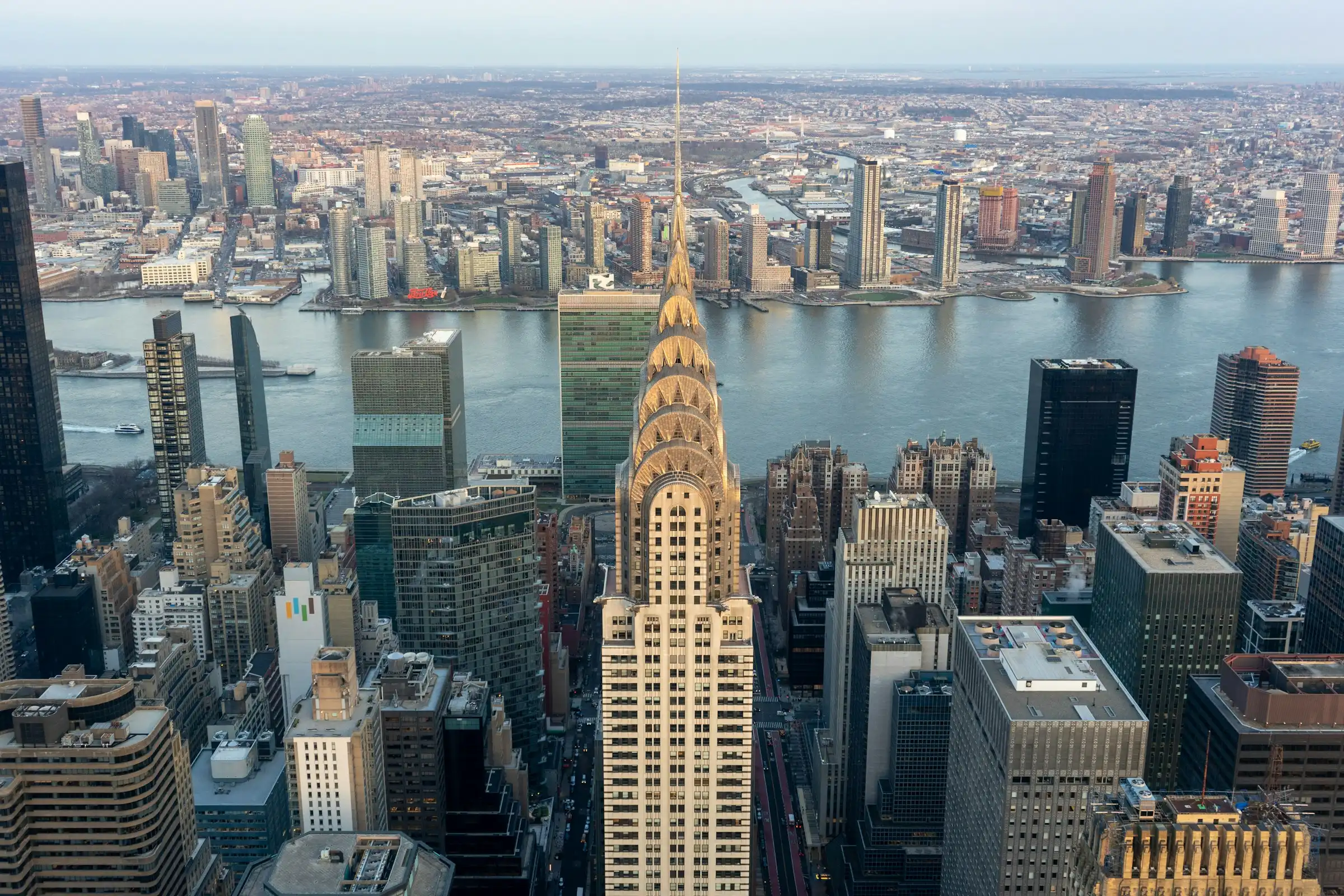
One of the most recognizable towers on the Manhattan skyline is headed for a full restoration. Tishman Speyer has taken control of the Chrysler Building through a long-term ground lease with The Cooper Union, ending a stretch of unpaid rent, litigation, and visible decline at the 1930 Art Deco landmark on Lexington Avenue.
Quick Answer: Tishman Speyer signed a 150-year ground lease for the Chrysler Building in October 2026 and will invest $235 million, on top of lease payments to landowner The Cooper Union, to restore the tower. The plan renews the crown and facade, modernizes building systems, and adds amenity floors to reposition the 77-story landmark as a boutique office building.
What Was Announced
On October 7, 2026, Tishman Speyer and The Cooper Union announced that they had finalized a 150-year ground lease for the Chrysler Building at 405 Lexington Avenue, between East 42nd and East 43rd Streets. Tishman Speyer committed $235 million to the property in addition to ongoing ground rent to the college. The amount of those rent payments was not made public.
The firm is backed by several institutional investors, with Canada’s Public Sector Pension Investment Board (PSP Investments) as a lead partner. The group will finance both the lease and the redevelopment entirely with equity, meaning no construction debt is attached to the plan.
What the Restoration Includes
According to the plans released with the deal, the work covers the building inside and out:
Exterior: The facade will be restored and its distinctive crown renewed.
Building systems: Elevators, electrical, mechanical, and air-handling systems will be modernized, with a focus on energy efficiency.
61st floor: The level known for its oversized eagle gargoyles, which were modeled on a 1929 Plymouth hood ornament, will become an indoor and outdoor amenity floor with a lounge, food and beverage service, and gathering space.
Underground arcade: A second amenity suite will offer fitness, wellness, and meeting space.
Office space: Tishman Speyer plans to prebuild move-in-ready suites covering 75 percent of current and future vacancy, a strategy it previously used at neighboring 6 Grand Central Tower.
The stated goal is to market the 1.3 million-square-foot tower as a boutique office address rather than a conventional large-floor-plate building.
How the Building Got Here
The Cooper Union has owned the land under the tower since 1902, when the children of founder Peter Cooper gave the parcel to the school. Ground rent from the site has long supported the college’s financial aid, and the new lease arrives as Cooper Union works toward restoring full-tuition scholarships for all undergraduates.
Tishman Speyer is returning to a building it knows. The firm and its partners bought the Chrysler Building along with other properties for $220 million in 1997 and restored many of its Art Deco interiors, The New York Times reported. In 2008, most of that stake was sold to an Abu Dhabi investment fund for $800 million.
The building changed hands again in 2019, when RFR Holding and Austria’s Signa paid $151 million. That low price reflected a ground rent that had climbed to about $32 million a year and a tower in need of major work, 6sqft reported at the time. Signa filed for insolvency in 2023, and after talks to renegotiate the lease went nowhere, RFR stopped paying rent in mid-2024. Cooper Union pursued eviction over more than $21 million in unpaid ground rent, and the leasehold was put back on the market in May 2025.
The Dispute and Open Questions
The transition was contentious. RFR sued Cooper Union, arguing that the college’s handling of campus protests had hurt the building’s ability to attract tenants. A judge dismissed that suit and awarded Cooper Union damages for the missed rent. In the meantime, tenants reported broken elevators, cracked ceilings, pest problems, and concerns about drinking water quality, according to 6sqft’s coverage.
Several details remain unknown. Neither party has disclosed the annual ground rent under the new lease, and Tishman Speyer has not released a construction timeline. Rob Speyer told The New York Times that the new terms were built to be sustainable for both sides, but declined to share specifics.
What Comes Next
The next visible steps are likely to be leasing activity tied to the prebuilt suites and any approvals needed for work on a designated city landmark, since changes to the exterior and crown fall under Landmarks Preservation Commission oversight. Tishman Speyer has framed the timing around demand, with its CEO pointing to a historically strong moment for the Manhattan office market. Speyer also told the Times that limited new office supply and high construction costs make restoring existing towers more attractive than building from scratch.
Why This Matters for NYC Real Estate
For us, this deal is about more than one famous skyline. When a well-capitalized owner commits $235 million in all-equity funding to a 96-year-old office tower, it signals real confidence in Midtown East and the Grand Central corridor. That corridor is the daily commute for many of our Upper East Side clients, and a healthier office district nearby tends to support demand for homes within an easy ride on the Lexington Avenue line.
We also see this as part of a broader pattern across Manhattan: restoring and repositioning older, character-rich buildings instead of replacing them. Prewar co-ops and townhouses on the Upper East Side carry the same kind of value. Buyers continue to pay for craftsmanship, history, and well-run buildings, and owners who invest in systems and upkeep tend to protect long-term property values. If the Chrysler Building’s crown is shining again in a few years, it will be a good reminder of what thoughtful stewardship can do for any address.
Frequently Asked Questions
Who owns the Chrysler Building now?
Tishman Speyer controls the building under a 150-year ground lease signed in October 2026. The Cooper Union continues to own the land beneath it, as it has since 1902.
How much is Tishman Speyer investing in the Chrysler Building?
Tishman Speyer and its partners committed $235 million, plus ground lease payments to The Cooper Union. The project is financed entirely with equity.
What renovations are planned for the Chrysler Building?
The plan restores the facade and crown, modernizes elevators and other building systems, adds an amenity floor on the 61st floor and a fitness and wellness suite in the underground arcade, and creates move-in-ready office suites.
Why did the previous owners lose the Chrysler Building?
RFR Holding and Signa bought the building in 2019. After Signa’s 2023 insolvency and failed lease renegotiations, RFR stopped paying ground rent in 2024, and Cooper Union pursued eviction over more than $21 million owed.
When will the Chrysler Building renovation be finished?
No completion date has been announced. Tishman Speyer has not released a public construction schedule.
Source: This post is based on reporting by Aaron Ginsburg, “Chrysler Building will get major revamp under new owner,” published by 6sqft on October 7, 2026.
Social Cookies
Social Cookies are used to enable you to share pages and content you find interesting throughout the website through third-party social networking or other websites (including, potentially for advertising purposes related to social networking).